

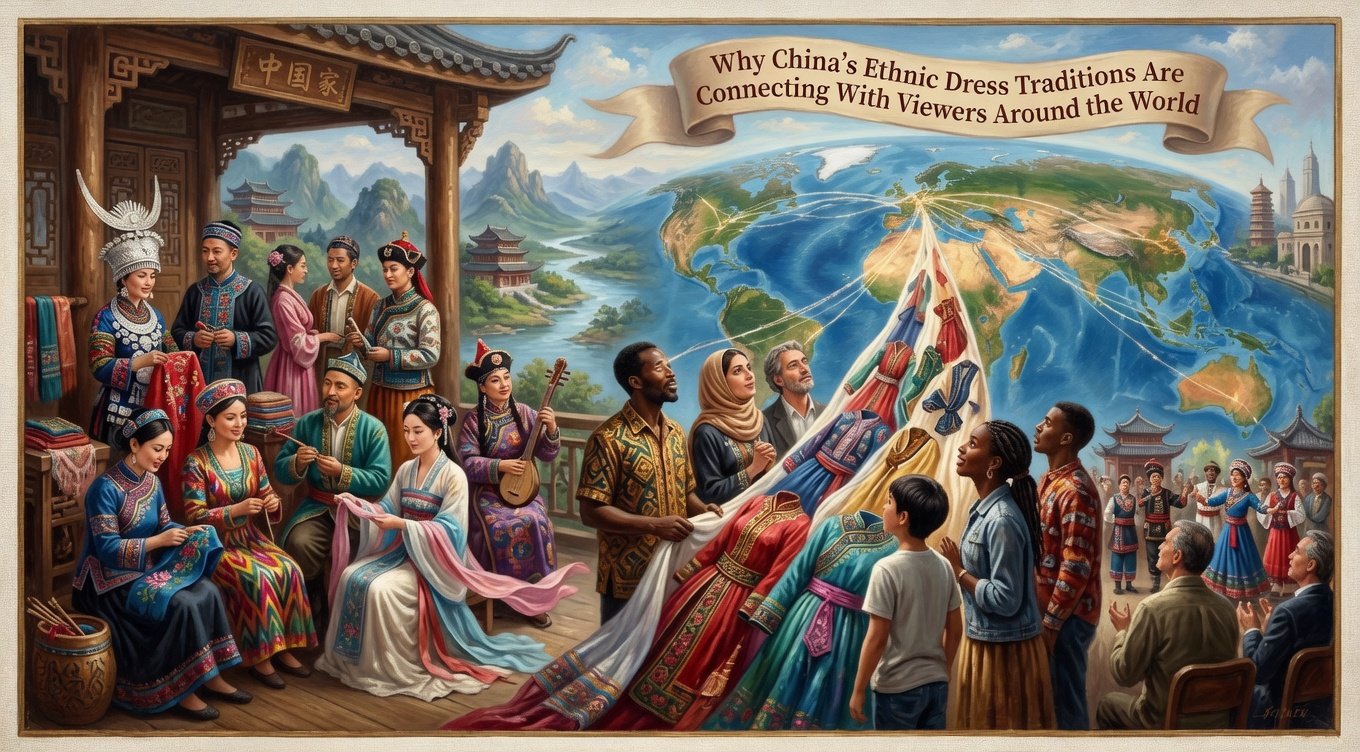

From Hani embroidery to Miao styling videos, traditional ethnic clothing in China is finding a wider audience online, and people are responding to it with real curiosity and admiration.
You can learn a lot about a culture from the way people dress, but that only really clicks when you see the details up close. That is part of the reason videos about China’s ethnic clothing traditions have been connecting with so many viewers online. They are colorful, yes, but they also feel personal. Instead of presenting tradition as something distant or frozen in time, these clips show it as something people still wear, make, teach, and take pride in.
People Are Seeing More Than Just Beautiful Clothing
What draws people in at first is usually the visual side of it. The embroidery, the silver ornaments, the layered fabrics, the textures, the colors — it all catches the eye immediately. But the reason these videos travel so well is that they do more than show a pretty outfit. They hint at the history behind it, the community that keeps it alive, and the craft that makes each style distinct. That gives the clothing weight. It stops being costume and starts feeling like culture with a living heartbeat.
Traditional Craft Feels More Alive When It Enters Everyday Conversation
One of the nicest things about this kind of content is that it brings traditional craft into ordinary conversation. A viewer might click because the styling looks dramatic, but stay because they start wondering who made the fabric, what the patterns mean, or how the design has been passed down. That kind of curiosity matters. It opens the door to deeper interest, and it gives cultural heritage a way to travel without losing its roots.
There Is Also a Quiet Confidence Behind It
What comes through in many of these stories is confidence. Not the loud kind, but the steady kind that comes from people knowing the value of what they have. When artisans, creators, or local communities share ethnic dress traditions with the world, they are not presenting something dusty or fragile. They are showing something that still belongs in modern life. That changes the tone completely. It feels less like preservation behind glass and more like culture being worn, enjoyed, and carried forward.
Why This Matters for China’s Cultural Story
For international audiences, this kind of material does something useful. It widens the picture. A lot of people outside China know a few visual symbols already, but the country’s full cultural range is much broader than that. Seeing lesser-known traditions from different ethnic communities helps people understand that Chinese culture is not one flat image. It is layered, regional, and full of local character. That makes the whole story richer.
Maybe that is why these videos feel so effective. They do not lecture. They simply let people look, react, and appreciate what they are seeing. And once that happens, interest tends to follow naturally. For a site like AllWinChina, that is exactly the kind of positive cultural bridge worth building.

COMMENTS